Weighted or Unweighted GPA?
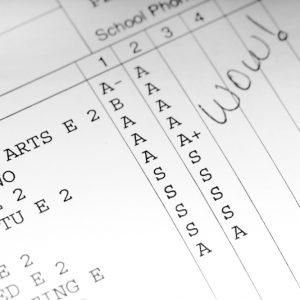
How do colleges calculate GPA in the admissions process? Some students take courses that “weigh” more than others, which can boost their GPA and their class rank. But how do colleges treat these different weights when they read your application?
Most colleges will consider both your weighted and unweighted GPA, and most high schools will report both to the colleges to which you are applying.
Colleges want the weighted GPA to reflect your class rank, as well as the relative rigor of your high school course load. But they will not use this weighted GPA in comparing you with other applicants.
Most colleges will use the unweighted GPA as the best reflection of your high school performance. As they say, “an A is an A.” A B in an Advanced Placement course does not mean that you somehow really got an A in that course…you still did B work, according to your teacher. So while the weighted GPA will reflect the relative rigor of your high school coursework, the unweighted GPA reflects your actual performance in those courses.
So don’t be lulled into complacency when you get a “B” on that AP history test by telling yourself that B work equals an A in a less rigorous course. The fact is that colleges will pay closer attention to your unweighted GPA than to an average that is artificially inflated.
Furthermore, many colleges today are “stripping” GPAs of any fluff courses, such as gym, art, music, business, or other courses not considered to be sufficiently academic in nature. Padding your GPA, therefore, is not really possible by getting a straight-A average in chapel or woodworking or glee club. Colleges want to know how well you do in your academic core subjects: English, math, science, social studies, and foreign language.
Bottom line: your GPA matters.
PS: You might want to look at my post on how to calculate your “real” GPA.
Mark Montgomery
Montgomery Educational Consulting
Technorati Tags: GPA, college admission, unweighted, weighted, Advanced Placement, honors courses Del.icio.us Tags: GPA, college admission, unweighted, weighted, Advanced Placement, honors courses Furl Tags: GPA, college admission, unweighted, weighted, Advanced Placement, honors courses
37 Responses to “Weighted or Unweighted GPA?”
Leave a Reply
- Weighted or Unweighted GPA?
- Calculating Your "Real" Grade Point Average (GPA)
- Six Tips For Getting Great Letters of Recommendation For College
- How Good are Advanced Placement (AP) Courses? Are They Worth Taking?
- Class Size and Student-to-Faculty Ratios: What the Statistics Don't Tell You
- Division I vs. Division III: Sports as a Job, or Scholar-Athlete?
- College Fit: How Does the Shirt Look on Me?
- Quality of the Educational Experience: Questions to Ask Admissions Officers
- SAT Will Allow Students To Submit Best Scores To Colleges
- School's Out! Top 10 Summertime Tips for College Admission
- January 2009
- December 2008
- November 2008
- October 2008
- September 2008
- August 2008
- July 2008
- June 2008
- May 2008
- April 2008
- March 2008
- February 2008
- January 2008
- December 2007
- November 2007
- October 2007
- September 2007
- August 2007


Mark,
We struggle with the tradition (and validity) of class rank. Are colleges more interested in percentage in the class or the actual number in the class?
Also, how important is the high school profile materials sent with an application? I see a range from professionally published materials to single photo-copied sheets of paper.
Thank you.
Hi, Eric. Thanks for the question. As a school administrator, I can understand your struggle.
Colleges like class rank because it helps them understand where a particular student stands in relation to his or her peers. By giving your honors and AP courses extra weighting, a college can see that the 4.0 from a student with a rigorous curriculum ranks higher than a student with a rigorous curriculum. But they can also eyeball this, because they have a lot of experience in rating the rigor of a curriculum (I know that some will actually assign a value, perhaps on a scale of 1 to 5, as they read the transcript, with a 5 being a very rigorous curriculum and 1 being academic lite). This is shorthand to help them compare apples and oranges.
Are actual numbers necessary? Is #1 in the class really that much better than #3? Probably not. Many high schools do not rank–and don’t even provide colleges with percentages. And still students from those schools are admitted to top colleges. Percentages help provide a snapshot, too.
While class rank sometimes means a lot to some kids and some parents, the absolute numbers are irrelevant, because admissions officers take so many other things into account when rendering their decisions. Harvard turns down hundreds of valedictorians every year. Just because you’re #1 doesn’t mean much if you don’t have those other qualities Harvard wants in its incoming class.
So I wouldn’t hesitate to get rid of the ranking system in a high school, as it creates undue pressure among students for hundredths and thousandths of points that don’t really mean anything.
As for the school profile, my sense is that colleges want solid, readable information. They want to be able to compare your school with the one across town. I’d focus on the quality of the information presented and on the clarity of presentation. You don’t need to waste taxpayer dollars on full-color printing and expensive collating or binding. As Sargeant Friday might have said, “Just the facts, ma’am.”
Perhaps other readers have other thoughts on this subject. Feel free to chime in!
Thanks for visiting, Eric.
I am interested inknowing how to calculate the weighted GPA. Our computer generated GPA is unweighted and we are sometimes asked for weighted GPA to complete scholarship applications.
I see two ways of doing this on-line.
1) the regular classes are A = 4.0, B=3.0
C= 2.0
Advanced = A=5.0, B=4.0, C=3.0, D=2.0
OR.
2)regular classes are A (93) = 4.3, B = (85
3.5, C = (72) 1.2
Advanced = A= (93) = 5.3, B = (85) 4.5,
C - (72) 2.2
The issue is that the second scale seems more exact because it allows for the more exact interpretation of the student’s grade.
Please advise me on which is correct.
Dear Janet,
Thanks for visiting my blog. You raise an interesting question.
I am not sure I understand why you are going through these calculations. I know colleges allow you to put the “weighted” GPA on an application. But as my post points out, colleges will strip the weightings anyway–especially if your son or daughter is applying to a selective college.
Inventing weights in cases when schools do not require them seems unnecessary, and even unwise. Remember, too, that your child’s transcript will be sent to the college in question. It will not look good if you invent weights that neither the transcript nor the school report will support.
College admissions people prefer the unweighted GPA, coupled with some indication of class rank (if the high school calculates class rank).
So my advice is to save yourself the trouble be proud of a good unweighted GPA.
If you’d like to talk about this issue further, please don’t hesitate to give me a call or leave another comment here.
Thanks again for visiting, and for your interesting question.
I am applying to a few Canadian Colleges and they say on their entrance requirements that a 3.0 GPA is necessary. My current unweighted GPA is a mid to high C, but weighted it is in the high B range. My total SAT score was 1800 with 670 reading and 530 math. My class rank is in the top 30% and I meet all their other entrance req. but this is the one that I am most worried about. Is there a good chance of being accepted because of everything, or should I look somewhere else because of a less than required GPA?
Jack,
You ask a good question…and the right one. Which Canadian universities and colleges?
Canadian colleges, more than US ones, tend to make their decisions almost entirely on high school grades. A mid to high C, unweighted, is what they will most likely see or take into account. You can go ahead and apply, but I think you’re wise to look for other options, both in the US and Canada.
Where are you from?
Thanks for visiting my blog, and for your good question.
I’m from Pennsylvania. I have realized it would probably be adventageous to call the admissions offices at the Universities that I’m interested in. I’m looking at Waterloo, UBC, Trent, and Dalhousie. I don’t know if it helps at all that I’m also a Canadian citizen. My unweighted GPA is 2.72 so I guess that is high C, and my weighed one comes out to a 4.22 out of 5. I have a few other options that I am looking at, I’m just worried that because it says “minimum entrance requirement” that I may truly be in trouble. Thanks for the help.
What will matter most is your performance, not your citizenship. You are right to connect with the universities you mention, though if you were asking a US university, you would be unlikely to get a straight answer from an admissions person until they saw your entire file. I am not an expert on Canadian admissions, so I’m not sure how they will react initially. Just be polite and honest and explain you are a Canadian living in the US, and you can’t get good advice in the US, so you need some help from someone on the “inside” to provide you with some honest advice. I always advocate candor; it totally disarms most people. If you sound desperate to get in, most people will hold back. But if you are simply asking advice, you may get some useful information. Good luck, and let me know how it goes!
Also, Jack, the MacLean’s Guide to Canadian Universities is pretty clear on the minimum standards required for admission. But again, I’m not exactly sure how to translate US grades into the Canadian equivalent. I may be able to do some sleuthing, if you like. Let me know.
It appears to me that if you are getting Bs and Cs in honors classes that you are probably better off just taking normal classes and getting As and Bs and then doing very well on your SAT / ACT exams. Why should a student struggle through these honor classes if the chances of hurting your chances of getting into college are greater then the benefits of potentially helping?
Additionally, I know that many honors teachers state that getting the B in honors is better than getting an A in the normal class, but this does not appear to be the case.
Thanks,
Brad
[...] and “unweighted” grade point averages. In a previous post, I detail the differences between a weighted and unweighted GPA. Basically, a weighted GPA takes into account the difficulty of the courses a student is taking, [...]
Hi Mark,
Just found your site. It is great!
I have a related question. What is the traditional translation of High School number grades to letter grades? In other words what number grade becomes an A or A- or B+. Is 90 an A? What is A+? What is A-? B+? etc…
I want to give my homeschooled son a fair evaluation as he applies to take college courses (still as a high school junior) at a local university? I believe the number grades he’s been assigned are reasonable and accurate. I’m just not sure how to fairly translate them to number grades.
THANKS A TON,
Louis
Louis,
Thanks for visiting and for your compliment.
As a homeschooled student, your son’s grades will mean much less than other factors universities will consider in the admissions process. I suggest that you get in touch directly with the admissions folks at the local university in question and let them know your son would like to take some courses, and ask what they’d like to see in the way of assessments to determine his eligibility. While more and more colleges are becoming more familiar and accustomed to working with homeschooled students, most have to evaluate those students on a case-by-case basis.
Also, if you haven’t already, make sure that your son registers for and takes as many SAT 2 tests as possible. These are excellent indicators of competence in commonly taught subjects.
As far as your question on percentages is concerned, I’ll revise the post to include some information on percentages. Good idea, and thanks for giving me the nudge!
Let me know if you have more questions or ideas.
Louis,
An update: I’ll address how to calculate your GPA using percentages at this post: http://greatcollegeadvice.com/calculating-your-real-grade-point-average-gpa/
Thanks!
Hi Mark,
OUTSTANDING! Thanks so much for such a quick, excellent, and extremely helpful response. We will keep all your suggestions in mind. And we must definitely look into the SAT2 tests.
Thanks again,
Louis
ps. I’m going to direct others to your greatcollegeadvice.com.
Louis,
I’m glad this helped. Let me know if I can be of any further assistance…and please do tell your friends!
Thanks!
Mark,
Re. this thread on weighted GPA, for clarity might you answer the following question please?
Two students:
1) GPA of 3.83 in an International Baccalaureate curriculum
2) GPA of 3.83 in an normal US high school curriculum
Are these two students on “equal ground” for acceptance?
thanks
Vivid
Hello, Vivid. Thanks for your comment and question.
The quick answer to your question is “no”: the IB student will have the edge. But it depends on what you mean by “normal.” We’d have to talk about a particular school and a particular curriculum. Without a national curriculum in the US, each school district defines “normal.” I would have to compare the two transcripts side-by-side to give you a more complete answer.
But generally speaking, the rule is this: the more rigorous the curriculum AND the higher the grades, the better the chance of admission–on purely academic grounds. But remember, admission is an art, not a science, and GPA is not the only factor involved here.
I sense you are looking for a hard and fast rule. Unfortunately that there is no perfect clarity in this business. So in the absence of specific information about your child’s grades and curriculum, all I can say is that the general rule is that if you seek acceptance to the most selective schools in the US, you must take the most rigorous curriculum available to and perform exceptionally well in everything.
I hope my “unclear” answer is helpful. I wish I could be more scientific. But college admissions were a science, we wouldn’t need admissions officers (or consultants like me)!
All the best to you!
Qualifications: I am a nosy parent of two HS juniors. I am just voicing an opinion regarding the importance of weighted vs unweighted grades when I say that the US is a big place, and I’m willing to be that *some* schools strip weightings, others do not, and the smart colleges use the SAT and unweighted GPA as filters to cull the applicants they do not want, and then spend time looking at a host of locally important criteria to pick from their ‘qualified’ pool those that will be offered admission. I further guess that course rigor is the most important second level general sieve, while individuals who display exceptional isolated talents and interests will receive special notice.
In an odd but reasonable way, curiosity and enthusiasm make for a splendid HS experience, AND sterling application. GPA accounting is best left to NCLB piecharts.
Lastly, a technical question for you Mark: Is there national agreement what courses to give additional weight towards ? I notice that my kid’s HS weights classes called ‘honors’ in their titles, but not AP classes. I hope my earlier comments are enough to convince you and any readers that this question is more a comment on the irony and futility of the entire GPA merry-go-round.
Thanks for the chance to sound off, and I’ll leave with a question to every student: what book did you last read ?
Eric,
Thanks for “sounding off.” Sounds like you and I could have a fun discussion about the merry-go-round and NCLB pie charts. And your reminder to read is spot on. Despite the fact I make my living in this field, I do feel that we get so wrapped up in the numbers and perceived levels of prestige that we forget what this is all about: education.
Let me answer your question: No. We have no national standard in education of any sort. At any grade level. We have some non-binding recommendations in some areas. But with regards to what to weight and what not to weight, this is up to each one of the 14,000 school districts and thousands more private schools. It’s a bit crazy.
Which is why colleges and universities–especially the more selective ones–will strip weights in an attempt to compare apples to apples.
As I have said before, admissions is not a science. Numbers matter, but they are not enough to get you in. Contrast this with the UK, where *all* that matters is the numbers: get the right grades (which are nationally normed) and you’re in. No activities. No essays. Hard to say whether the British system is better, but it’s a darned sight more clear!
I’ll add that your guess that *some* colleges strip weightings is correct. You can guess that the more selective a school is, the more likely it is to strip weightings. Colleges with fewer applicants to choose from probably don’t go to the trouble. *But* they will, as you point out, take a hard look at the rigor of the high school curriculum. If it’s full of fluff and remedial courses (but a 4.0!), the transcript is unlikely to impress anyone…even at less selective colleges.
Thanks again for stopping by, and feel free to sound off here any time!
And folks, listen to Eric! Read a book!
Mark,
Once I start ranting, it’s hard to stop ..
Stripping advanced curriculum classes of extra GPA value may have the very unfortunate side-effect of encouraging students to stay away from a more challenging schedule. I understand that top tier schools demand high grades in a challenging schedule, but the other 95% of students are receiving a strong signal to excel in a mediocre environment. Personally, I’d like to see top colleges move to a GPA that is made up of an AP testing core that includes Calc I, Chem, BC physics, English and History. I know this would encourage teaching towards tests, but at least the tests are a reasonable level and the same for everybody.
Man, how I hate the word ’standardized’.
Cheers !
Hi again, Eric.
Keep in mind that the weighting of rigorous courses does have its rationale–within the high school setting. Students are thus rewarded–in terms of class rank–for piling on the advanced courses.
And while selective colleges don’t have “standardized” formulas for admission, your science/humanities/social studies combo–de facto–is required. Again, it’s not formulaic or standardized in a formal sense, but the expectation is that students desiring entry to highly competitive colleges will have excellent grades in very rigorous courses. If you don’t have both elements (excellence + rigor), then chances of admission fall off considerably.
Thanks again for the visit. It’s clear I have to write a post about class rank. I need to get cracking.
Good point Mark, that class rank includes class difficulty — sort of. My kids have taken AP classes that students who received an ‘A’ in the class scored between a 2 and 5 on the AP test. This wide variation happens because of grade inflation in the classroom by way of homework buffering, extra credit giveaways. and grade curves.
I mention it in this context only to point out that GPA cannot as a practical matter stratify student achievement or ability; at best, it is a lowest common denominator. I think good admissions boards realize this, and just don’t pay much heed to a 0.5 GPA range across their ’strong applicant’ pool. The message for students and parents in my opinion is to not focus on the extra 0.1 or 0.2 addition to the GPA unless it is below say 3.5. Effort directed towards areas of interest and critical reading of good literature is I think likely to give much higher returns with better SAT scores, better essays, and better interviews.
I’m not minimizing reading’s other salutary effects, just trying to stay on-topic.
Berkeley’s 2008 freshman class has an average unweighted GPA of 3.87, and a weighted GPA of 4.35. The numbers work out to 50% of HS classes taken by these students are AP or honors. Since most students are boxed into their local school core curriculum in the 9th grade and part of 10th grade, this is quite the statistic. Just to put a number on (excellence + rigor).
I wrote earlier in error that AP classes are not given extra GPA weight. Sorry for the confusion.
Another important point for parents and students: beware the trap of looking good locally, only to find that at nationally selective schools the student is not accepted, or later drops out. We now know of a group of kids from our little city that went to prestigious schools and could not keep up. Their story has been consistent: they came to college on day #1 less prepared than their classmates.
Hey, I applied to LSU and my weighted GPA is around a 3.5 and my unweighted is in the mid 2.7-2.9 range and my SAT was a 1050 (math and reading). Does this hurt my chances of getting in?
Hi, Jared.
First off, the answer to your question depends somewhat on whether you are a Louisiana resident or not. Non-residents will find it more difficult to be accepted.
Second, your SAT score puts you at approximately in the bottom 25% of the students accepted. In other words, 75% of those accepted have higher SAT scores than you. Finally, the reported average GPA for Louisiana State is about a 3.5 But LSU does not clarify if this is weighted or unweighted. If I had to guess (and even educated guesses do not count), this figure is the weighted GPA. So your GPA is at the average mark. So will this hurt your chances? Impossible for me to say without a lot more information from you and a lot more research about LSU. Question: what’s your backup plan?
Good luck, and thanks for visiting my blog.
Hi, I would like to know if i have a chance to get into washU in st.louis. I got a 35 on my ACT, I have a weighted 4.07, unweighted 3.967 gpa, many extracurriculars that i have been doing for a long time, and a 2400 on my SAT, i am also a year ahead of my class, i am supposed to be a junior but am i a senior, i have always taken the toughest classes
i had one b, but mainly because at that time my mum was in the hospital, and every night i drove to the hospital ( 1 hour away) to visit her, because she was very sick,i and couldnt get enough study time…
Dear Ash,
Thanks for visiting my blog.
While I cannot guarantee anything, I would say you have a good chance of getting into any college or university in America. One B is not going to kill you–not with your killer test scores.
Write a good essay. Take a deep breath. Relax.
Make sure Wash U is not the only application you submit, as admissions officers can be mercurial. But you’ll be very, very competitive no matter where you apply.
Best of luck!
Hi Mark. I’m very glad that you’ve published this article. It reveals a lot of good insight for me to follow.
I’m a High School Junior, and recently I received a ‘C’ in AP Chem. I’ve got a 4.3 weighted GPA, and a 3.7 unweighted. Plus, I’ve been an active member in various leadership programs and community service activities.
So that leads me to my question…
How much weight will services influence a college application? If I were interested in entering a UC school, would my test scores and community activities outweigh the ‘C’? I understand that there are also interviews, but I am very iffy.
Thank you for your time!
-Joe
I am a resident of Maryland. I applied to, among other schools, University of Maryland College Park. I have a 3.4 UWGPA and a 4.04 WGPA. I obtained a 1390 (700 Math, 690 reading) and a 620 on the writing portion, of the SAT. My mother also received her master’s degree from the University and later taught Spanish for several years. How would you rank my chances?
Hi, Joe. Thanks for visiting and for your question.
As I have pointed out elsewhere, the whole world of admissions is not as scientific in the US as it is in many other countries. We sometimes yearn for that clarity, that bright line between “acceptable” and “unacceptable.”
Here’s my question: why did you get the ‘C’ in AP Chemistry? Do you have a good explanation? Can you help the admissions folks to understand why a good student like you experienced difficulty in AP Chem? If so, you should include that explanation in your application (on the Common Application, this goes in the “other information” portion of the writing section). Don’t make excuses, but do provide explanation. Further, what was your score on the actual AP test? Did you take it? Why or why not? Finally, is this ‘C’ you received your final grade, or your semester grade? If it is the semester grade, don’t spend energy worrying: spend your energy pulling that grade up.
I was talking to a client yesterday about his AP Chemistry class, and he was telling me that he didn’t feel his teacher was helping that much to prepare him for the exam. So I told him to go out and buy a guide book, and tutor himself and figure out what he needed to know and understand for that test.
Sometimes, high school students learn through this experience that they–and not the teachers–are ultimately responsible for their own learning.
Anyway, I hope this is somewhat helpful. I realize I’m providing an answer that is equally “iffy” as your question, but it’s the best I can do!
Good luck, and let me know if I can be of any further help!
Hello, Leo, and thanks for visiting my blog. The only statistic you did not provide is your class rank. If you fall within the top 10% of your graduating class, I’d say your chances are quite good. If you are within the top 25% of your class, your chances are still pretty good. You fall squarely within the UMd historical averages. This is not a guarantee, of course, as there are too many other variables we have not discussed. But based on the bits of information above, I’d be optimistic.
Good luck! Please let me know where you end up attending!
Thanks Mark. I understand how that process goes. I’m just hoping you could address my question with a bit more clarity.
I’ve got a lot to account for (some reasons I’d be uncomfortable disclosing here, no offense) but I was wondering if you could still explain to me if community service and extracurriculars, and test scores can really pull me through.
Thanks again.
-Joe
Joe,
If there are things you cannot disclose to me, then there are clearly other factors that will weigh into the decision by the admissions committee. Extracurricular activities (and accomplishment!) will help mitigate damage in other areas. But without a full and clear picture of everything in your academic and disciplinary record, I can’t really be more specific in my assessment. Even then, if we’re talking about disciplinary issues, all bets are off.
My only advice: be completely honest, truthful, and contrite in all your explanations. You do yourself absolutely no favors by trying to sweep facts under the rug.
Again, I’m sorry I cannot be more specific. This admissions game is just too darned unpredictable sometimes.
Good luck!
Mr. Montgomery,
If unweighted GPA is ultimately all that matters, why in the world would a student take honors/AP courses? My daughter is a good, not great, student who happened to test into a couple of AP courses and takes honors math classes as well. I’d honestly prefer that she take ‘regular’ courses and make A’s if what you say is true. (3 hours of college history credit is great, but not if it adversely effects one’s GPA)
Cody,
Thanks for visiting my site. As I have said elsewhere, GPA is not the only thing colleges take into account when examining a transcript. They also look hard and long at the rigor of the curriculum a student is taking.
If your daughter is capable of doing AP or college level work in high school, then she should do so. If she is unprepared to reach for these heights, then taking “regular” courses is just fine.
The issue is this: to many students are lulled into complacency thinking that their “weighted” GPA is fine and dandy, when in fact it masks weaknesses that the “unweighted” GPA reveals.
Selective colleges want it all: a rigorous curriculum (honors, AP, IB, whatever is offered) and excellent grades. If you have a great GPA and a ho-hum curriculum, you will find that the most selective colleges will focus on the ho-hum and not on the great.
I hope this helps. Let me know if I can further clarify this for you.