 Skip to content
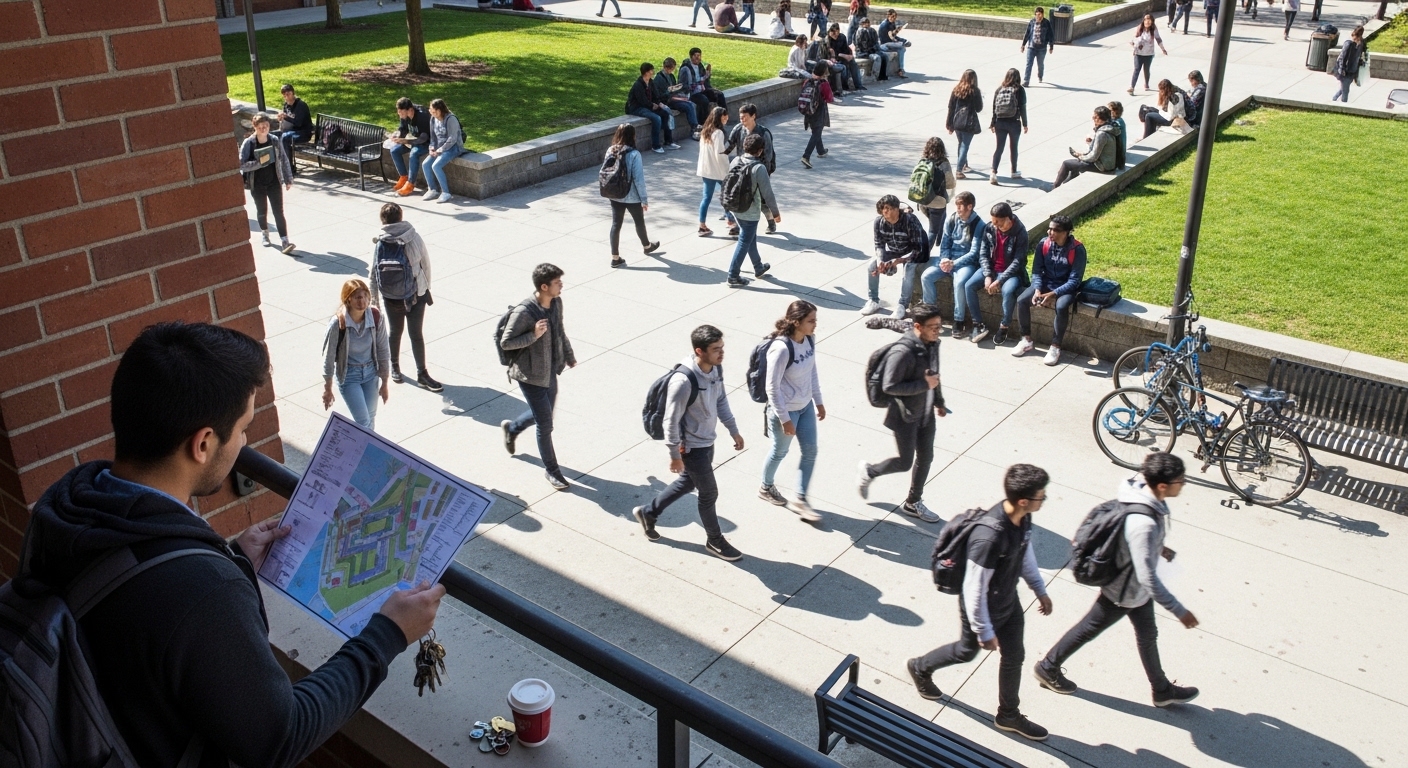
Planning college visits is one of the most underrated parts of the college search. Most students visit on a weekday, fall in love with the energy, and assume it’s always like that. It isn’t.
The social atmosphere of a campus can shift dramatically depending on the day of the week, and students who don’t investigate this before committing often end up somewhere that doesn’t match what they expected.
Why Campus Culture Predicts Your Social Life More Than Any Ranking
College rankings measure selectivity, faculty resources, and graduation rates. They don’t measure what your Saturday afternoon looks like or whether you’ll have people to eat dinner with on a Sunday.
As counselor Sarah Myers puts it, the question students need to ask is simple: where am I going to be happy and where can I have some fun? When students are comfortable on a campus, they perform better academically. The social environment isn’t separate from the academic experience; it’s what makes it possible.
When a large percentage of students leave on weekends, those who remain (often students from farther away, international students, or students without cars) can find themselves in a social vacuum. The spontaneous hallway conversations and dining hall introductions that build lasting friendships don’t happen if one party is two hours away at their parents’ house.
This mismatch between expectations and reality is one of the most common sources of college dissatisfaction, and one of the most preventable.
The Hidden Cost: What You Lose When the Campus Empties
Campus Involvement and Student Development
Communication, collaboration, initiative, adaptability: these skills don’t develop in a classroom. They develop through shared campus life. When that disappears on weekends, the development window narrows significantly.
The Social Development Gap
As counselor Pam Gentry describes it, building a college list should be an iterative process of self-discovery: learning what kind of environment you thrive in and what kind of community you want to belong to. Choosing a campus without understanding its social rhythms short-circuits that process before it begins.
Mental Health
A student who struggles with loneliness or anxiety will feel it more acutely on a quiet campus than a bustling one. When evaluating mental health support, including counseling availability, wait times, and crisis resources, also ask whether the social environment itself is structured to reduce isolation or inadvertently amplify it.
Commuter School vs. Residential Campus: An Important Distinction
A commuter school is a known quantity. Students and families generally go in with clear expectations.
A residential campus that empties on weekends is a different problem: harder to anticipate and easier to overlook. The causes vary:
- Geographic concentration: Students from nearby go home for the weekend.
- Greek life dominance: When Greek organizations control most social programming, non-members often find little reason to stay.
- Weak weekend programming: A campus that schedules most events Monday through Thursday is signaling, intentionally or not, that weekends are for leaving.
- Apartment culture: When upperclassmen move off-campus, the social energy goes with them.
Red Flags: A Checklist for Evaluating Weekend Campus Culture
| Red Flag | What to Look For | How to Check |
|---|---|---|
| Weak weekend programming | Few events on Friday/Saturday | School’s public events calendar |
| Greek life dominance | Greek orgs host most social events | Student newspaper, campus life page |
| Reduced weekend dining hours | Dining halls close early Saturday or Sunday | Dining services website |
| Low residential retention | Most upperclassmen living off-campus | Housing office, campus visit questions |
| Sparse weekend newspaper coverage | Little reporting on weekend campus life | Campus newspaper archives |
| Low Sunday brunch attendance | Dining halls visibly empty Sunday morning | Campus visit observation |
No single red flag is definitive. The pattern across multiple indicators is what matters.
The “Vibe Check” Toolkit: Questions That Reveal Weekend Culture
Tour guides are trained to present a school’s best face. Ask questions that require specific, observable answers.
Ask the Tour Guide
- “What does Sunday brunch look like in the dining hall? Crowded or pretty quiet?”
- “What do most students do on Saturday nights if there’s no organized event?”
- “What percentage of students go home most weekends, in your experience?”
Ask Current Students (Not on the Official Tour)
- “If I wanted to find people to hang out with on a Saturday afternoon, where would I go?”
- “Do most of your friends stay on campus on weekends?”
- “What’s the vibe like on Sunday?”
Observe Directly
- Visit on a weekday. The difference between a weekday campus and a weekend campus is one of the most reliable data points you can collect.
- Walk through residential areas. Are doors open? Are people in common spaces?
- Check the dining hall. Attendance patterns clearly indicate whether students are present and engaged.
- Spend time in the surrounding town. A campus’s relationship to its community shapes students’ weekend options. It also helps to learn what to expect at a college reception held in your area.
- Let the student explore alone. Walking around independently and observing quietly reveals things a guided tour won’t.
Applying This to Your College List
Understanding how to set the right admissions goals before building your list makes this entire process sharper. The goal is genuine choices, not just one school you got into, but multiple schools where you can actually see yourself thriving.
Weekend culture is one dimension of fit that deserves explicit attention. An extroverted student moving far from home needs a campus that stays alive on weekends. A more introverted student with family nearby may find a quieter weekend environment perfectly workable.
As Myers and Gentry put it, the formula for student success isn’t about what a college offers in the abstract; it’s about how you fit with what it offers. A mismatch between your social needs and a campus’s actual weekend culture produces unhappy, disengaged students.
College rankings won’t tell you this. The admissions brochure won’t tell you this. A weekday campus visit alone won’t tell you this. The questions above will.
What Observation Can and Can’t Tell You
Enrollment data, such as the proportion of in-state or nearby students, can signal what weekend patterns might look like. But data has limits.
The most reliable evidence is what you see during an active period of the academic year, what current students tell you when no tour guide is listening, and what the campus newspaper covers on Monday mornings.
Making the Call
If you thrive in a tight-knit, always-present community and want clubs, events, and spontaneous social life available seven days a week, a campus with a weak weekend culture is a poor fit regardless of its ranking.
If you value independence, have strong ties nearby, or are primarily focused on a specific academic program, weekend culture may matter less than other factors.
The point is to know before you commit. The admissions process, done well, is a reflective experience where students learn something about themselves and make choices that are genuinely their own. Investigating weekend culture is part of that reflection.
If you want help evaluating fit beyond the rankings, our counselors at Great College Advice bring nuanced, student-specific analysis to every engagement. Reserve a spot for a consultation today.

