Skip to content
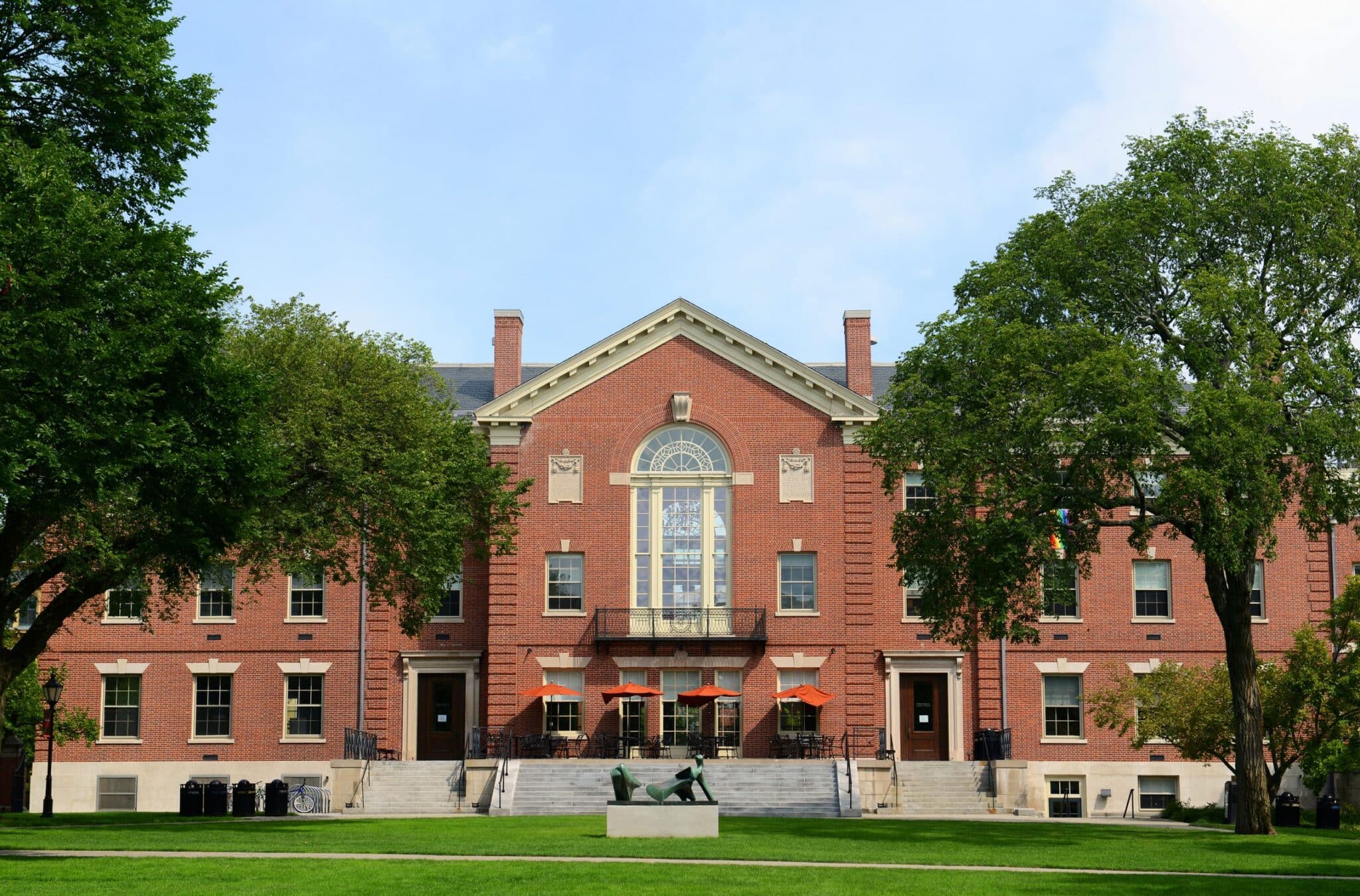
Brown University is one of the eight Ivy League universities. Often people lump all these universities together. However, each is very different in its own right.
In this video, we will explore what makes Brown different from all the rest.
So here I am today on the campus of Brown University one of the eight Ivy League schools. And sometimes it’s hard when I’m giving presentations to explain the difference among the Ivy League schools, and of course, the Ivy League is really nothing more than a football club. It was established so that athletes could play against one another, not because the schools have anything in common academically. Of course, a lot of really great students go to places like this, but they’re all very different and structured differently. Brown’s claim to fame is that it really has no structure.
Way back in the 1960s, 1968 and all of the—let’s call them reforms that happened in education around the ‘60s. The idea was that there was no need anymore to teach the old canon of academia. Prior to that a lot of students took Greek and Latin, took a very prescribed curriculum and the push in the 1960s was to eliminate all requirements.

Brown still embodies that decision to eliminate all requirements and allow students to study whatever it is they want. So you have a major at Brown but beyond that, you can take anything and everything you want. So there are no curriculum requirements other than completing a major. You also have the option of taking classes without even ever getting a grade. Again, this idea of the 1960s of we can do anything we want, where ever we want, it’s for us to decide and not the man; that is still very much the tradition at Brown.
Other Ivy League schools have a different set of priorities and a different curricular structure. But Brown really is that freewheeling, do whatever you want; you don’t even need to get grades if you don’t want to kind of place. It’s a very wonderful place. Providence is a fun town, an interesting town. Thayer Street is kind of fun and funky and of course, the campus is beautiful and the academic facilities are remarkable.
But don’t think that all the Ivy League schools are the same. They’re very different not only in look and feel but in the academic priorities set by the institution itself.
Frequently Asked Questions
What is Brown’s Open Curriculum and how should my child address it in their application?
Brown’s Open Curriculum is a distinctive educational philosophy that eliminates general education requirements, positioning students as the architects of their own education. To address this effectively, an applicant must transcend superficial mentions of ‘freedom’ and instead present a sophisticated ‘Intellectual Trajectory.’
This requires demonstrating two key components:
- A Coherent Intellectual Narrative: The applicant must connect their past pursuits—academic, extracurricular, and personal—to a future, interdisciplinary path of study that is uniquely possible at Brown. The goal is to show that their interests are not random but form a foundation for advanced, self-directed inquiry.
- A ‘Provisional Blueprint’ for Exploration: A top-tier applicant will articulate a potential, yet flexible, course of study. This blueprint should reference specific departments, research centers, institutes, and even professors. For example, a student interested in the ethics of artificial intelligence might propose combining courses from Computer Science (e.g., ‘CSCI 1420: Machine Learning’), Cognitive, Linguistic, and Psychological Sciences (CLPS), and Philosophy, citing a desire to engage with the Data Science Initiative. This demonstrates proactive research and intellectual maturity.
Expert Strategy: The application should frame the student not as a consumer seeking freedom, but as a future scholar prepared to build something meaningful with it. The blueprint should convey excitement for exploration, not a rigid, predetermined path. It proves they possess the self-motivation and maturity to thrive with the autonomy Brown grants its students.
Learn more about Brown University and why Brown is so different from the other Ivy League universities.
Great College Advice Will Help You Get Accepted to Your Ivy League Dream School
Understanding how selective colleges like Brown actually evaluate GPA, course rigor, extracurriculars and your standardized test score is the foundation of a competitive application strategy. If you are ready to understand exactly where your academic profile stands and what steps will strengthen it, connect with our team to start building a strategy grounded in how admissions offices at elite universities actually make decisions.